EVOLUTIONARY EXPLANATION
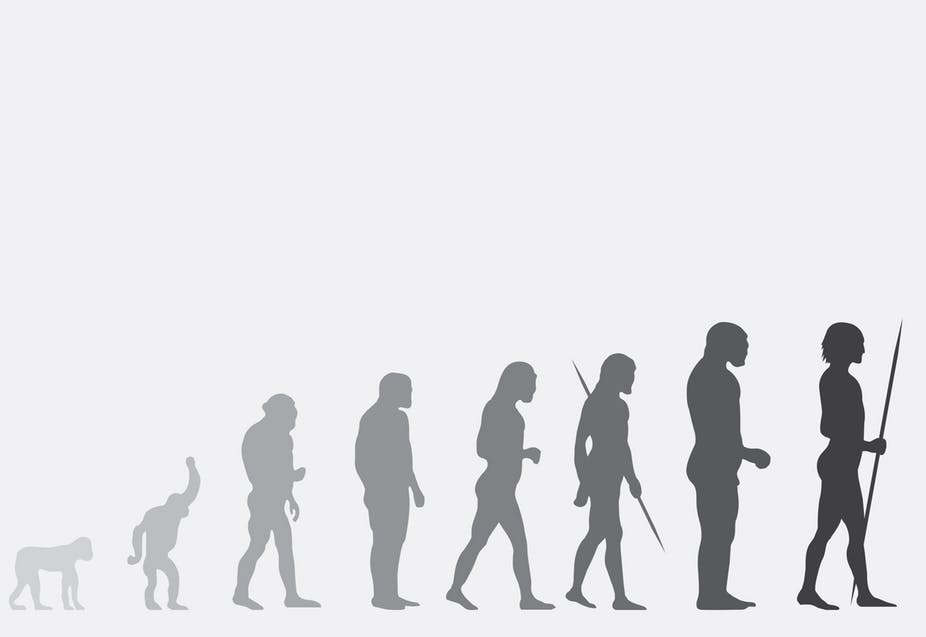
The video “The Trouble with Cognitive Bias” by Learn. Genetics, explains how cognitive bias are a series of processes, involving the intake and evaluation of information, that defy rationality and logic. Human beings do not always process their environment in logical ways. However, their behavior is always connected to greater adaptation and survivability in the environment they occupy. It cannot be any other way, as the ones that are alive are the ones that adapted the best. For this reason, cognitive biases can be explained as adaptive techniques.
An article on Wiley Online Library explaining this evolutionary nature of cognitive bias gives a good example. Defined as a subcategory of Error Management Bias, and called Audio Looming, this bias makes humans hear sounds approaching them as closer and faster than they actually are, compared to sounds that are receding. The article explains that sounds approaching are a possible threat and being ready for it sooner increases the chances of surviving the threat.
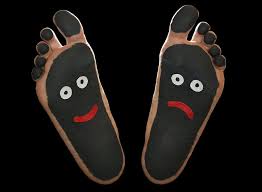
There is a specific cognitive bias that caught my attention. The mood congruent bias. This bias affects the way we process information by allowing our current mood to influence our judgment. I found this interesting as I am highly controlled by my mood. I process my environment and the behavior of the people around me based on how I feel at the moment. That is why, I often wait for a mood change before making an important decision. That way I compare the thoughts I had in a specific mood to the ones I had in another, and then try to make a rational choice based on this comparison, hopefully finding a logical medium.
My interest brought me to research a possible evolutionary explanation. I found one. Forgas in his work “Mood Effects on Cognition: Affective Influences on the Content and Process of Information Processing and Behavior” explains that negative moods, and positive moods work in different ways to allow diverse kinds of processing styles, which are all useful, depending on the situation they are applied to. This theory is called “Assimilation/Accommodation model.”
According to this theory, positive moods allow assimilation while negative moods accommodation. Meaning, when happy we tend to group stimuli in less broader categories, and we think in a more global and general way. Negative moods, instead allow a more local and specific thinking style, detecting more abstruse stimuli. Furthermore, positive moods make us feel that the information we have suffices to solve a problem, while negative moods make us alert to a lack of information and drive us to seek more.
The bottom line is that both are useful, negative moods and positive moods. It’s not surprising, since, if they exist, they most probably have a function. We are defined by evolution, which is ruthless. What is not needed, or worst functions as an obstacle is eliminated. What remains is the necessary and advantageous.
 JacquelineFilmStudent