Featured

Gene Editing

Ethics & Benefits

A video on Genetics Learning Science Center explains that mutations occur continuously. Each one of us has 60 new variations that cannot be found in our parents. If the mutations occur in genes that do not code for a specific protein, the mutation goes almost unnoticed. If instead they code a protein, the mutation becomes more relevant. Some mutations are beneficial for the individual. Some are not.

The Broad Institute in Boston did a research on people suffering from obesity that did not have diabetes. They found a gene called SLC30A8 which makes people 65% less likely of getting diabetes This would be an example of a positive mutation. Cystic Fibrosis, on the other hand, is a life-threatening genetic disease caused by the mutation of a single gene, the CFTR gene. This disease leads to respiratory failure, problems with digestion and the reproductive system.”

I am particularly fascinated by the possibility to modify and edit genes. I am aware of the dangers that being able to do so can cause. Who decides which mutations are beneficial, and which are not? Pam Belluck in an article for The New York Times titled “In Breakthrough, Scientists Edit a Dangerous Mutation From Genes in Human Embryos” discusses the ethical problems of gene editing. She writes, “But the achievement is also an example of human genetic engineering, once feared and unthinkable, and is sure to renew ethical concerns that some might try to design babies with certain traits, like greater intelligence or athleticism.” At the same the article stated it could help cure diseases, such as cystic fibrosis. As for now, as the article claims, gene editing will be, can be, only used for life threatening, genetic disease conditions.

INBIO 101 “Evolution and Human Behavior”

MY THOUGHTS

I enjoyed this class a lot. Lectures were interesting and opened my mind on the omnipresence and importance of evolution in understanding human behavior and existence.

As a humanities student, I got to explore scientific literature, which without this course I would have never done. I believe in the value of interdisciplinary learning. An open mind is built by approaching and understanding the vastness of human knowledge, your ignorance and your impossibility of knowing everything. You pick your field, but are aware of the importance of all fields. You learn the dignity and honor there is in relying on other’s expertise while they hopefully rely back on yours.

Specifically, I think this course worked well as an ISP because it allowed you to integrate your own field. For example, I learned how to develop a website, which will be useful in my field and for my graduate school application. I am thinking about adding tabs to my website containing all my written work in my field; scripts, theoretical papers on cinema, film reviews I wrote for Keene State College’s newspaper The Equinox, etc. Furthermore, I now understand how useful Twitter is as a tool. I am following a lot of scriptwriters, producers, and television and film content creators. It’s really cool to be able to see what they think, are up to, and also have the chance to exchange thoughts with them through tweets.

All summed up I really like this method of using interdisciplinary courses to teach how to use tools valuable for any field, while also giving access to a different field, understanding its role, importance, and magnitude. I think all interdisciplinary courses should try to accomplish this very goal. It opens the minds of the students, teaches them respect for all fields, and finally makes them aware of their ignorance as acquiring any form of knowledge does anyway. The more you know, the more you realize how little you actually know, and the immensity of what is, and always will be, still there to be learned.

EMOTIONS INFLUENCE OUR JUDGMENT

EVOLUTIONARY EXPLANATION

The video “The Trouble with Cognitive Bias” by Learn. Genetics, explains how cognitive bias are a series of processes, involving the intake and evaluation of information, that defy rationality and logic. Human beings do not always process their environment in logical ways. However, their behavior is always connected to greater adaptation and survivability in the environment they occupy. It cannot be any other way, as the ones that are alive are the ones that adapted the best. For this reason, cognitive biases can be explained as adaptive techniques.

An article on Wiley Online Library explaining this evolutionary nature of cognitive bias gives a good example. Defined as a subcategory of Error Management Bias, and called Audio Looming, this bias makes humans hear sounds approaching them as closer and faster than they actually are, compared to sounds that are receding. The article explains that sounds approaching are a possible threat and being ready for it sooner increases the chances of surviving the threat.

There is a specific cognitive bias that caught my attention. The mood congruent bias. This bias affects the way we process information by allowing our current mood to influence our judgment. I found this interesting as I am highly controlled by my mood. I process my environment and the behavior of the people around me based on how I feel at the moment. That is why, I often wait for a mood change before making an important decision. That way I compare the thoughts I had in a specific mood to the ones I had in another, and then try to make a rational choice based on this comparison, hopefully finding a logical medium.

My interest brought me to research a possible evolutionary explanation. I found one. Forgas in his work  “Mood Effects on Cognition: Affective Influences on the Content and Process of Information Processing and Behavior” explains that negative moods, and positive moods work in different ways to allow diverse kinds of processing styles, which are all useful, depending on the situation they are applied to. This theory is called “Assimilation/Accommodation model.”

According to this theory, positive moods allow assimilation while negative moods accommodation. Meaning, when happy we tend to group stimuli in less broader categories, and we think in a more global and general way. Negative moods, instead allow a more local and specific thinking style, detecting more abstruse stimuli. Furthermore, positive moods make us feel that the information we have suffices to solve a problem, while negative moods make us alert to a lack of information and drive us to seek more.

The bottom line is that both are useful, negative moods and positive moods.  It’s not surprising, since, if they exist, they most probably have a function. We are defined by evolution, which is ruthless. What is not needed, or worst functions as an obstacle is eliminated. What remains is the necessary and advantageous.

Corona Virus: To Read When Feeling Hopeless

©ScienceNews
Taken from: https://www.sciencenews.org/article/human-rights-scientists-research-clash-goverment-crack-down

Staying positive during these trying times is hard. The uncertainty makes the anxiety spiral. Media does not help. I recently went into my first mediatic anxiety ridden search. I was reading all the possible catastrophic consequences this viral outbreak could cause; economic crash, mental health issues soaring, years of normal life being taken away. I remember contacting my friends in a panic frenzy.

Optimism is a hard perspective to maintain. However, we must. This fight cannot be won with a negative bleak view. We must believe in the human species now more than ever. My friends started sending me all the possible positive articles they could find. I felt better. There was hope. This post serves this purpose; without lying and giving hopeful but misleading messages, I intend to give trust-worthy information about humanity’s chances of overcoming this crisis.

Let’s start with VACCINATION

Positive fact no. 1

An article by The Washington Post claims scientists have found the virus is mutating rather slowly. This means that when the majority of people will have been vaccinated or will have had the virus already, they will be relatively permanently immune to the virus.

Positive fact no. 2

An article by The New York Times underlines how humanity has started a global race towards the development of a vaccine. The reason behind this, the article asserts, is nationalistic competitiveness. Probably true, I won’t disagree. However, millions are being spent by single countries, and thousands of scientists are working non-stop. Whatever is pushing them, they will find a vaccine, and surely it will be shared internationally.

Positive fact no. 3

The National Institutes of Health informs that phase 1 of clinical trials is already taking place; a vaccine is being tested on humans. As a video by Digital Trends explains, this vaccine is a messenger RNA vaccine, as Moderna Inc., the Massachusetts company that developed the vaccine, works mostly with RNA vaccines rather than DNA vaccines. Digital Trends states that RNA messenger vaccines are more successful than DNA based ones.  

Moving on to TESTING

Positive fact no. 4

An article by CNN communicates that The U.S. Food and Drug Administration has authorized the use of a new test developed by California based company Cepheid. This test gives results in 45 minutes. An article by NPR  voices that these tests will not be available until the end of the month. Yet, this remains to be incredibly good news. In less than a month we will be able to quickly test the immunity of people.

Positive fact no. 5

The Guardian wrote an article about the forthcoming availability of at home finger-pricking tests. The article clarifies that these are not antigen tests. Antigen tests are diagnostic; the results prove the presence or absence of the virus. The tests The Guardian mentions are likely antibody tests. Because the body takes time to build antibodies when exposed to an antigen, these tests might result negative even if the virus is present. However, the ones that result positive claim the immunity of the individual.

Positive fact no. 6

Digital Trends,in the video mentioned above, describes the new technologies developed to test fever; Thermometer guns, and drones that scan masses are some. The latter is particularly efficient as it does not necessitate human interaction which spreads the virus.

FINALLY, I HAVE ONE MORE POSITIVE FACT!

Positive fact no. 7

Due to the reduction of transportation – on land, water, and air – carbon emissions have gone incredibly down. The BBC wrote an article illustrating the massive reductions.  Other things have happened. The water of the Venice canals is now sparkly clean! The earth is taking back control, and selfishly, I’m excited for the natural beauty to come, in these dark and unstable times.

Sugar Craving: Evolutionary Mismatch?

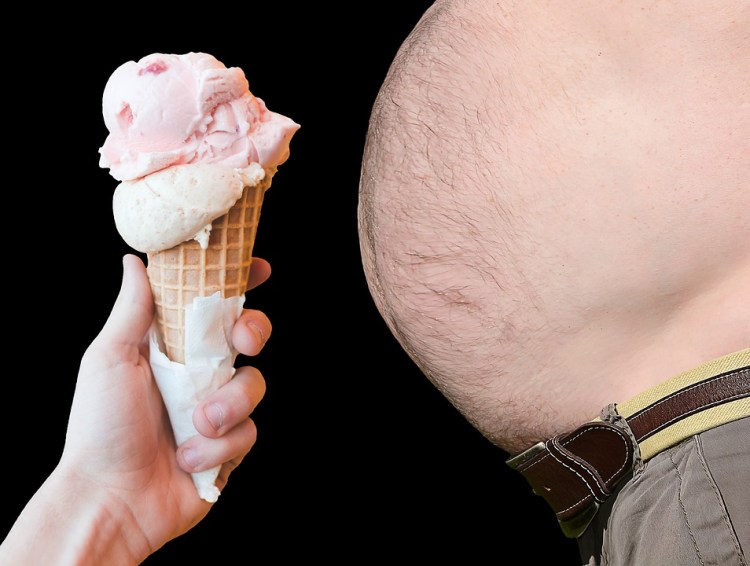
© Pixabay https://pixabay.com/photos/obesity-fat-diet-obese-overweight-4214936/

As the Evolution Institute explains evolutionary mismatches are genetic mutations that once were favored by natural selection, as they allowed the organism that carried them higher survivability in the environment of the time.  As the environment changes, however, often genetic evolution in the organisms that inhabit it does not follow as quickly. In other words, the genetic mutation, which was once favorable could become the opposite in the now changed environment, but It would take time a very long time for natural selection to eliminate the individuals that possess the now unfavorable genetic mutations. These genetic mutations are evolutionary mismatches, as they literally do not match the environment. The Evolution Institute underlines how humans are the one species that most dramatically and rapidly changes the environment. This renders the problem of evolutionary mismatch certainly more dire.

A notable and quite problematic evolutionary mismatch is the craving of sugar loaded foods. As the website Science Questions with Surprising Answers elucidates, in the past environment of our primate ancestors, fruits were less available than vegetables. However, the former provided higher energy spurts and allowed to store physical fat, that would come in handy in moments where food was lacking. As a consequence, primates that preferred fruit and sought it more eagerly, had higher chances of survivability. As they were more likely to survive, they also had a higher chance of reproducing within their lifetime. As a result, the “sugar craving” genes were spread more to the future generations.

Today this is a problem as fruits are no longer scarcely available. The rapid modification of the environment the Evolution Institute attributed to humanity is the cause of the problem. Modern society has not only made widely available fruits, but high sugar content foods such as desserts. Furthermore, sugar is in a very large quantity of industrially produced products.  An article by The New York Times cites a study by the University of North Carolina. This study states that 60% of industrialized processed foods and drinks contain sugar. The Center for Disease Control and Prevention states that between the years 2017 and 2018 42.4% of Americans are obese. Clearly in the current environment sugar craving is not an advantage.

Timothy M. Frayling et al. wrote a report posted on Science Direct about the gene variation, the allele, that causes sugar craving. The allele is FGF21. The interesting part about this allele is that it’s not solely linked to sugar craving but also to a decrease in body fat, and and increase in blood pressure and waist-hip ratio, which means the fat tends to accumulate on the hips. The decrease in body fat is certainly a positive attribute of this gene in the current environment. However, the rise in blood pressure is not. It’s fascinating to see how complicated it is, and how many variables are involved.

The allele FGF21 does not only have one simple consequence, and that questions its evolutionary nature. The bigger waist could be simply linked to higher fertility for females, but what would be the evolutionary advantage of an allele which causes high blood pressure? This allele also decreases body fat, which would convert it from an evolutionary mismatch to an advantageous evolutionary trait in contemporary times. Sugar craving might be questioned as an evolutionary mismatch, yet high blood pressure might reclaim that definition.  

True Information Vs False Claims: How to Know? Mark Caulfield

Mike Caulfield in his site infodemic.blog explains the ways we can all make sure the sources we are getting information from are trust-worthy. He is concerned about the spread of misinformation about the coronavirus. While the corona virus is certainly a hot topic right now, I think Caulfield’s techniques are useful for every day information checking on all topics! It’s important today, in the era of easy access to information, to be able to discern what information is truthful, and what is not.

He writes about hovering. By hovering he means checking the information on the individual who you are receiving the information from. He questions he advises to ask is whether the source is credible, and whether we need to further fact-check their claims or not. If it’s the twitter account of an individual, for example, we may look at their professional credentials. If it’s a news outlet, the respectability and reported accuracy and factuality of said outlet.

Connected to this last bit is the use of Wikipedia. Caulfield writes, “Just add Wikipedia.” Let’s say we look at someone’s twitter information, and we find out they work for a particular news outlet, of which we know nothing. In that case searching it on Wikipedia might let us know about their reliability and validity.

Caulfield precedes then illustrating what to do in the case we search the source and do not trust it. He writes a post titled “News search cross-check.” instructs to search for other articles, from other news sources we deem reliable, about the same topic. Obviously if we don’t fin anything, it’s bad news.

Sometimes, Caulfield writes in another post, the original source might be reliable, but the sharing source might not. The sharing source can re-frame what the original source has said, and change it in a way that it spreads mis-information. There are a couple of ways one can solve this problem. One is of course “News search cross-check”. The other is going to the original source, if that one is trustworthy. Caulfield in his example, underlines a specific technique. If there is a particular element within the story, as said by the sharing source, which appears suspicious, we can search its key word in the webpage of the original source, and see what is said about it. This way, we can prove if the claims of the sharing source are true.

I think Caulfield’s advice is precious! In order to be responsible and dutiful citizens we must understand the world around us. To do so, we have to be able to discern true information from false claims. We need to make choices for ourselves that protect us and our environment, in the present and future! We need the right information to do it! Check out infodemic.blog for in-depth explaining!

Becoming Human Documentary & Questions

  1. When and where was Lucy discovered? How old is Lucy? What species is she? Why was the discovery of the Lucy fossil so important?

Lucy was discovered in the Afar region in Ethiopia at the end of November in 1974, precisely at noon.  She is 3.2 million years. She belongs to the species Australopithecus afarensis. The hominids fossils that had been found before her were older than 3 million years. She was the most recent found ancestor. All of the human ancestor fossils found after her have been compared to and analyzed according to her.

2. What is a hominid? 

A primate that can walk upright.  

3. What impacts did a changing environment on earth have on hominids? What was the environment like towards the end of the Miocene (10 to 5 million years ago)? What were some consequences of this?

Towards the end of the Miocene, 8 Million years ago, the environment became dryer and colder, and the rainforests became woodlands. Many apes that thrived in the previous arboreal environment thanks to their grasping toes, and high mobility of arms and shoulders went extinct. The common ancestor of Apes and Humans survived.

4. Who is our closest living relative? Does this mean we evolved from this species? Why is the “missing link” concept between humans and apes living today a false idea?

Chimpanzees are our closest living relative. No, it doesn’t mean we evolved from them. What this means is that we share a common ancestor. Evolution does not happen chronologically, or linearly as people often imagine it to. There is no species in between apes and humans, that evolved into humans and therefore went extinct. We all evolved, apes and humans, from the same ancestor. One that probably looked very different from both modern-day apes and humans.

5. What is bipedalism? What is its importance in hominid evolution?

Bipedalism is the ability to walk upright. It was an evolutionary advantage because it improved and expanded the actions of many activities such as feeding, caring, and using gestures.

5. What is the Turkana boy fossil and why was he important? Describe some of its anatomical features. What is his age? What did he eat?

The Turkana boy fossil is the most complete Homo Erectus skeleton found. He was alive about a million and a half years ago. He is a 9-year old male and is 5 feet and 4 inches tall. He is a carnivore. Homo erectus is the first human ancestral species who has initiated species dispersal; Homo Erectus left Africa. Being a carnivore, it has a wide home range – meat everywhere works just the same – and moves depending on the number of members of its species in the land he inhabits.

6. What are some similarities and differences between Homo erectus and Homo sapiens?

They both have a generalized diet, and they both don’t have high sexual dimorphism. Although Homo Sapiens has slight sexual dimorphism, while Homo Erectus has some.  Homo Sapiens have a larger brain size and a higher variability as far as environments they can survive in. Furthermore, Homo Erectus has medium size brow ridges, while Homo Sapiens does not have a pronounced brow ridge at all. Yet, they both have fully bipedal anatomy.

7. Why did Homo erectus leave Africa and populate other areas of the globe?

Homo erectus left because of the numbers of members of its species in its ancestral land.

8. Carol Ward says that “Selection favored habitually terrestrial bipediality”. What selection pressures favored humans walking on the ground over swinging in trees?

The lack of trees – the deforestation of the land – was the reason behind the natural selection. Furthermore, it allowed them to hunt animals and therefore be able to colonize other areas, as carnivores have a larger home range than herbivores.

9. What is the major question about the evolutionary relationship between Neanderthals and modern humans? Explain the different ideas/conflicts about this. Compare the ideas of Paleoanthropologists Ian Tattersall and Cathy Willermet.

The major question is whether Neanderthals are a completely different branch of hominids and modern humans do not share any DNA with them, or they are a common ancestor of modern humans.

Tattersall believes that Neanderthals are a different species that has gone extinct. He thinks they are too different in face and brain case structure to share DNA with modern humans.

Willermet instead believes that Neanderthals have gone extinct but before that have mixed with Homo Sapiens. As a consequence, we share DNA with Neanderthals.

10. Africa was the only place that human evolution took place for the first three or four million years of hominid existence. The first species to spread into new continents was Homo erectus.  There are different theories about how our species, sapiens, spread across the globe.  Compare the Out of Africa theory to the Multiregional theory of modern human evolution and dispersal.   

According to the ‘Out of Africa’ theory modern humans evolved in Africa and then from there spread to other parts of the world. Other archaic human species that were present went extinct without mixing with modern humans. The variations in human populations occurred later in time, more recently. In this case breeding between Neanderthals and modern humans cannot happen.             The ‘Multiregional’ theory, instead, claims that modern humans evolved in various parts of the world, mixing with archaic human species, and evolving with the specific variations of their regional environment. In this case modern humans mated with Neanderthals.      

We originally come from Africa for both theories. However, in one case homo erectus evolved into modern humans within Africa and then migrated to the rest of the world without mixing with archaic humans. In the other case Homo Erectus migrated from Africa, evolved into modern humans and mixed with other archaic humans.

11. Scientists have discovered and investigated finger engravings in Australia, 24,000 years ago. What might these findings mean for human evolution?  What can we learn from studying people still living today, such as the Aboriginal people?

We can study the way our ancestors perceived the world, their culture, society, and activities.  We can find the origins of human consciousness. Finally, the paintings might show the way their environment was, the kind of vegetation and animals that were present.

12. Building shelters, hunting, tool making, controlling fire, language, wearing clothing, burying the dead, making art- all of these give us clues to our early cultural evolution. How can studying our past cultural evolution help us determine what our place is (or should be) in nature today? 

I think it definitely will be helpful. The past is always helpful for the present and the future. As long as we don’t start believing that the past is better than the present/future, and we keep progressing, I think looking back is useful. We are very similar to our ancestors, but we are also very different. You cannot unlearn or reverse the effects of experience. We are who we are and there is no going back, just moving forward. Hopefully, it will be for the better.

13. Explain whether thinking about the evolution of hominid species alters the way you think about human beings in general or yourself.

Even though I know this, often my subconscious forgets that we are animals. Studying evolution reminds me of that. It also reminds of how much we are deeply connected to the environment we live in. It makes clear how fragile but at the same time how resilient is this relationship.
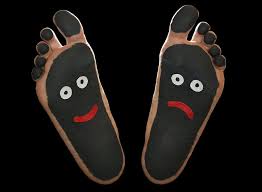
Why Are Women Shorter Than Men?

Free for commercial use, No attribution required

A friend told me one afternoon, and he presented it as a “trivia fact,” that women are on average shorter than men, because males on average prefer, and always have preferred, shorter females to taller ones. He argued that females were not shorter than males originally, but through a process of natural selection, determined by the males’ selection of mates, these “female shorter” genes were reproduced, and caused women to now be shorter than men. I decided to do some research.

Apparently, Darwin himself had coined the term “sexual selection.” Males and females choose their mates according to certain characteristics. Whoever has the most desired characteristics gets to reproduce. As a consequence, only certain characteristics get to be inherited by the future generations. For example, any trait that allowed males to beat potential competition for their selected female mate, became one of these most inherited characteristics. This might explain why taller men seem to have been preferred by natural selection. However, we still don’t have an explanation for the shorter women.

Stephen Sterns, professor of evolutionary biology at Yale University claims that shorter women statistically seem to bear more children. The data came from the Framingham Heart Study, a 1968 study which lasted 60 years. The survey had about 5,000 subjects. Another study by Open University’s Daniel Nettle found that shorter women are more likely to be in long term relationship and have children. He explains this by claiming that shorter women reach puberty before taller women, and that could explain why males chose shorter women over taller ones in the past.

Finally, the University of Helsinki found an actual gene that could further explain our quandary. This gene is involved in cartilage development and it effects height, making individuals shorter. Most importantly, it acts more strongly in women than in men. This gene is present in the X chromosome. One of the X chromosomes in females is usually inactive and potentially silences the genes it carries. However, this particular gene seems to be able to remain active. Therefore, females either presented the gene on one chromosome, or in some cases in both. The latter scenario would explain why it acts more intensely in females.

All summed up we found out that my friend was right. Preference in sexual mates had to do with it. However, it was not all up to the males’ preference. Males are taller because larger males could more easily defeat possible competitors. We also discovered that a gene might actually be involved, and that shorter women have more children and therefore spread their “short genes” more!

Design a site like this with WordPress.com
Get started